Navigating the world of kitchen gadgets can feel like a culinary maze, especially when you’re trying to figure out if you need a food processor, a blender, or perhaps even both. As someone who’s spent more than 15 years knee-deep in blenders and food processors, I can tell you that while they might look similar, these workhorses are designed for very different tasks. Choosing between a Food Processor V Blender really boils down to understanding their core functions and what you typically whip up in your kitchen. Let’s slice through the confusion and get to the bottom of this kitchen conundrum.
What Exactly is a Blender For?
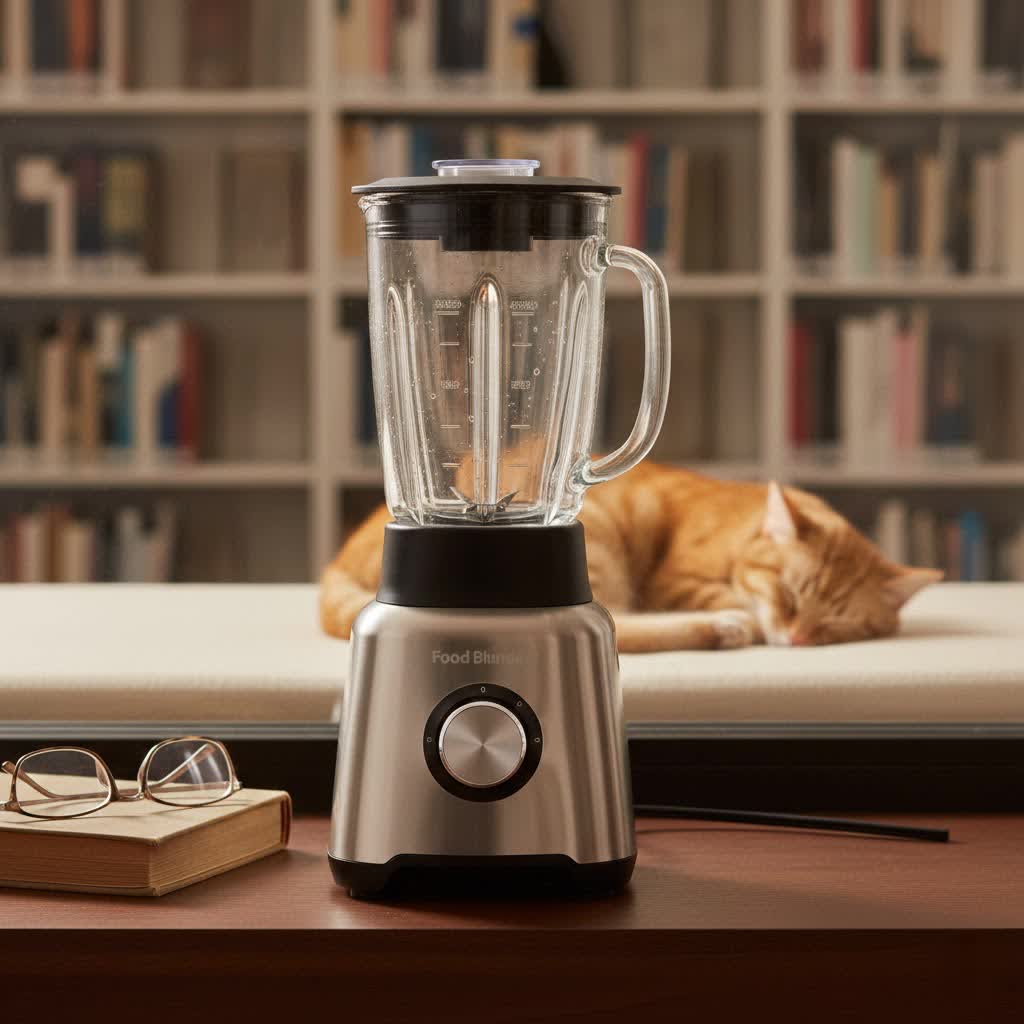
When we talk about blenders, we’re generally discussing machines built for blending. Think smooth, liquid concoctions. A blender’s primary design feature is a tall, narrow jar with blades at the bottom that create a vortex, pulling ingredients down and ensuring an even mix. This design excels at processing liquids or semi-liquids, transforming solid ingredients into a uniform, pourable consistency.
Common Uses for a Blender
So, what are blenders best for? They are champions at creating:
- Smoothies and Shakes: From leafy green health drinks to indulgent milkshakes, a blender makes quick work of ice, fruit, and yogurt, delivering that silky-smooth texture we all crave.
- Soups and Sauces: Whether you’re pureeing a hearty vegetable soup or whipping up a creamy pasta sauce, a blender ensures a consistent, lump-free result.
- Nut Butters: While some high-powered blenders can tackle nut butters, it often requires patience and scraping down the sides.
- Baby Food: Preparing fresh, homemade baby food is a breeze with a blender, allowing you to control ingredients and textures.
- Frozen Cocktails: Margaritas, daiquiris, or pina coladas – a blender is indispensable for crushing ice and blending spirits into frosty beverages.
|
Our Picks for the Best Food Blender in 2026
As an Amazon Associate I earn from qualifying purchases.
|
||
| Num | Product | Action |
|---|---|---|
| 1 | Turelar Immersion Blender Handheld Corded Hand Blenders Set 1100W, Trigger Variable Speed 5 in 1 Stick Emulsifier with Chopper, Whisk and Frother for Soup, Baby Food and Smoothies |

|
| 2 | nutribullet Personal Blender, Shakes, Smoothies, Food Prep, and Frozen Blending, 24 Ounces, 600 Watt, Gray, NBR-0601WM |
|
| 3 | Ninja BN701 Professional Plus Blender, 1400 Peak Watts, 3 Functions for Smoothies, Frozen Drinks & Ice Cream with Auto IQ, 72-oz.* Total Crushing Pitcher & Lid, Dark Grey |
|
| 4 | Hamilton Beach Electric Vegetable Chopper & Mini Food Processor, 3-Cup, 350 Watts, for Dicing, Mincing, and Puree, Black (72850) |
|
| 5 | Ninja BR201AMZ Professional Blender 2.0, 1200 Watts, Auto-iQ Program, Total Crushing Blades, 72-oz. Pitcher, 4 Manual Speeds for Smoothies, Shakes, and Frozen Drinks, Dishwasher-Safe Parts, Dark Grey |
|
| 6 | Aeitto Blenders for Kitchen 1800W Max Power Smoothie Blender with 68Oz. Jar, 3 Preset Programs & 7 Speeds, Professional Countertop Blender for Smoothies, Ice Crush, Frozen Drinks, Silver |
|
| 7 | Hamilton Beach Power Elite Wave Action Blender For Smoothies, 40 Oz Glass Jar, 12 Functions Including Puree, Crush Ice, 700 Watts - Black (58148A) |
|
| 8 | Ninja Mega Kitchen System, 1500W, 72 oz. Full-Size Blender & 8-Cup Food Processor with (2) 16 oz. Cups , Black, BL770 |
|
| 9 | SUNVIVIPRO 1000W Professional Hand Blender, 12-Speed Heavy Duty Immersion Blender with 10 Attachments, 20OZ Food Chopper, Stainless Steel Whisk, Milk Frother for Commercial Use |
|
| 10 | BLACK+DECKER PowerCrush Multi-Function Blender with 6-Cup Glass Jar, 4 Speed Settings, Silver |
|
“Blenders are engineered for fluidity,” explains Anya Petrova, a renowned culinary technologist. “Their strength lies in creating uniform liquid textures, from the thinnest juice to the thickest hummus, though the latter often requires a tamper or high-powered model.”
What Exactly is a Food Processor For?
Now, let’s talk about the food processor. If a blender is about fluidity, a food processor is all about prep work. Designed with a wider, shorter bowl and a range of interchangeable blades and discs, a food processor is a versatile tool for handling solid and semi-solid ingredients with precision and power. It’s built for slicing, dicing, shredding, chopping, and mixing without adding much, if any, liquid.
Common Uses for a Food Processor
What does a food processor excel at? It’s your go-to for:
- Chopping and Mincing: Onions, garlic, herbs – a food processor can chop them uniformly in seconds, saving you precious knife time.
- Slicing and Shredding: With various disc attachments, you can effortlessly slice vegetables for salads or gratins, or shred cheese and cabbage for coleslaw.
- Dough Making: Many food processors come with a dough blade, making them perfect for kneading bread dough or pastry crusts without the mess.
- Pureeing and Grinding: Think homemade pesto, hummus, or even grinding nuts and seeds for flours. The wider bowl and S-blade are ideal for these thicker preparations.
- Making Crumbs: From breadcrumbs for stuffing to graham cracker crumbs for a cheesecake crust, a food processor makes it simple.
- Emulsifying: Creating mayonnaise or salad dressings is quick and easy, with a feed tube that allows for a slow, steady stream of oil.
“A food processor is your kitchen’s unsung hero for meal prep,” says veteran chef Marco Rossi. “It transforms tedious chopping and slicing into a quick, effortless task, unlocking a world of culinary possibilities, especially for baking and large-batch cooking.”
Food Processor vs. Blender: Key Differences to Ponder
Understanding the core functions helps, but let’s dive into the distinct differences between a food processor v blender that truly set them apart.
Blades and Attachments
- Blender: Typically features a fixed set of multi-tiered blades designed to create a vortex and pull ingredients downwards. While some high-end blenders offer specialized blade assemblies, the core function remains blending.
- Food Processor: Boasts a much wider array of interchangeable blades and discs. The standard S-blade is for chopping, mixing, and pureeing, while discs handle slicing, shredding, and grating. Some models even include dough blades and whisk attachments.
Bowl/Jar Design
- Blender: Characterized by a tall, narrow jar, often with measurement markings. This design promotes the vortex action essential for smooth blending of liquids.
- Food Processor: Features a wide, squat bowl with a central spindle where blades attach. This design is optimized for processing solid ingredients without necessarily requiring liquid.
Power and Speed
- Blender: Modern blenders, especially high-performance models, offer powerful motors (often 1000+ watts) and high RPMs to pulverize tough ingredients, including ice and frozen fruit, into incredibly smooth liquids.
- Food Processor: While also powerful, food processor motors are geared more towards torque for cutting, chopping, and kneading, rather than solely pulverizing. They often feature pulse settings for greater control over texture.
Functionality and Versatility
- Blender: excels at liquifying, pureeing, and emulsifying, producing smooth and consistent results for drinks, soups, and sauces. Its versatility shines in liquid-heavy recipes.
- Food Processor: offers unparalleled versatility for solid food prep – chopping, slicing, shredding, grating, kneading, and more. It’s built to handle tasks that require precision cutting and mixing of dryer ingredients.
Can a Blender Do What a Food Processor Does? (And Vice Versa?)
This is a common question, and the answer is usually: not really, or not well.
While a high-powered blender might manage to chop a small amount of vegetables in a pinch (using pulse settings), the results are often uneven, and it’s not designed for tasks like slicing or shredding. Trying to knead dough in a blender is a recipe for disaster.
Similarly, a food processor can puree ingredients to a certain extent, especially for thicker mixtures like hummus or pesto. However, it struggles with creating truly smooth, liquid textures like those you’d get from a smoothie. The wider bowl doesn’t create the same vortex, and you’ll often end up with chunks unless you add a significant amount of liquid. You certainly can’t make a perfectly smooth protein shake or crushed ice for a margarita in a food processor.
“It’s like asking a hammer to do a screwdriver’s job,” I often tell new cooks. “They both apply force, but their specific designs make them masters of different domains. Trying to force one to do the other’s job usually results in frustration and subpar results.”
Choosing Your Kitchen Companion: Food Processor v Blender
So, how do you decide which one to invest in? Consider your cooking habits:
- You’re a smoothie enthusiast, a soup lover, or someone who enjoys protein shakes daily. You need a blender. Look for models with strong motors if you blend a lot of frozen ingredients or ice.
- You love to bake, cook from scratch, or find yourself spending ages chopping vegetables. A food processor will be your best friend. Prioritize models with various attachments and a sturdy build.
- You do a bit of everything and want maximum convenience. You might benefit from having both a blender and a food processor. They truly complement each other in a busy kitchen.
What if I can only get one?
If kitchen space or budget is a major concern and you absolutely must choose only one, consider what type of cooking you do most often.
- For daily healthy drinks and occasional creamy soups, a good blender (perhaps a high-performance model) is the way to go.
- For extensive meal prep, baking, and cooking for a family, a versatile food processor will likely offer more utility in the long run.
Some manufacturers offer combination appliances that attempt to merge the functions of a food processor and a blender. While these can be intriguing, they often excel at neither task as well as dedicated machines. It’s a compromise that might work for very occasional use, but for consistent performance, separate units are usually superior.
The Bzzgw Perspective: Mastering Your Kitchen Tools
At Bzzgw.com, we believe that understanding your tools is the first step to becoming a more confident and efficient cook. The food processor v blender debate isn’t about one being “better” than the other; it’s about identifying which tool is best suited for your culinary journey.
Modern kitchen appliances are designed to make our lives easier, but they perform best when used for their intended purpose. Investing in the right tools, whether it’s a powerful blender for your morning smoothie ritual or a robust food processor for your weekend baking projects, will not only save you time but also elevate your cooking to new heights.
Food Processor vs. Blender: Frequently Asked Questions
Q1: Can I make nut butter in a regular blender?
A1: While some powerful blenders can make nut butter, it’s often a challenging process requiring frequent scraping and pulsing. Food processors are generally better suited for this task as they have a wider base and blades designed for thicker, less liquid-dependent processing.
Q2: Is a food processor good for making smoothies?
A2: A food processor can technically blend some smoothie ingredients, but it won’t produce the same silky-smooth texture as a blender. Its wider bowl doesn’t create the necessary vortex to fully pulverize all ingredients, often leaving chunks.
Q3: What’s the main difference in blade design between a food processor and a blender?
A3: Blenders typically have fixed, multi-tiered blades designed to create a vortex for liquidizing. Food processors use an S-blade for chopping and mixing, plus interchangeable discs for slicing, shredding, and grating solid foods.
Q4: Do I really need both a food processor and a blender?
A4: If you frequently make smoothies, soups, and sauces, and also do a lot of meal prep like chopping vegetables, shredding cheese, or making dough, then having both a dedicated food processor and a blender will offer the most versatility and efficiency in your kitchen.
Q5: Can I use a food processor to crush ice?
A5: While a food processor can break down ice, it’s not ideal for uniformly crushing it or making slush for drinks. A blender, especially one with a strong motor, is specifically designed to handle ice effectively and create consistent results.
Q6: What wattage should I look for in a good blender vs. a food processor?
A6: For blenders, 800-1200 watts is a good range for everyday tasks, with high-performance blenders often exceeding 1500 watts. For food processors, a motor between 600-1000 watts is generally sufficient for most household tasks.
Q7: Are there any hybrid appliances that combine both functions effectively?
A7: Some brands offer combination units that aim to perform both food processing and blending. While they can save space, they often don’t excel at either task as well as dedicated machines. For optimal performance, separate units are usually recommended.
Conclusion: Embrace Your Kitchen’s Potential
Ultimately, the choice between a food processor v blender isn’t about picking a winner; it’s about empowering your kitchen with the right tools for the job. Both appliances are phenomenal time-savers and creativity boosters, each with its unique strengths. By understanding these differences, you can confidently select the perfect partner for your culinary adventures, ensuring your time in the kitchen is more efficient, enjoyable, and delicious. So, take a moment, consider your cooking needs, and choose the appliance that will truly make your recipes sing.
