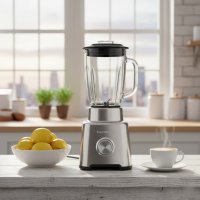
Welcome to the heart of Bzzgw.com, where we delve deep into the world of kitchen appliances. As your seasoned guide with over 15 years in the trenches of blending, I’m here to tell you that a food blender machine isn’t just another gadget; it’s a cornerstone of modern cooking, a true kitchen workhorse. Whether you’re a smoothie enthusiast, a soup savant, or an aspiring culinary artist, understanding your food blender machine is the first step to unlocking its full potential. Forget watery shakes or lumpy purees – we’re here to equip you with the knowledge to blend with confidence and precision.
What Exactly is a Food Blender Machine?
At its core, a food blender machine is a versatile kitchen appliance designed to mix, puree, or emulsify ingredients. Picture a robust motor-driven base, firmly holding a container, inside which razor-sharp blades whirl at incredible speeds. This simple yet ingenious design allows you to transform everything from soft fruits into silky smoothies to tough ice cubes into a frosty snow, effortlessly merging flavors and textures. It’s more than just a convenience; it’s an essential tool that streamlines meal prep, expands your culinary repertoire, and promotes healthier eating habits.
Decoding the Different Types of Food Blender Machines
Over my many years with these fantastic machines, I’ve seen the evolution of blender technology firsthand. Each type of food blender machine is crafted with specific uses in mind, and knowing the differences is key to making the right choice for your kitchen.
The Versatile Countertop Blender
When most folks think of a food blender machine, the countertop model is likely what springs to mind. These are the classic, full-sized blenders that come with a substantial jar sitting atop a motorized base. They are the generalists of the blending world, perfectly suited for everyday tasks like whipping up family-sized batches of smoothies, blending creamy soups, crushing ice for refreshing drinks, or even mixing pancake batter. Their multiple speed settings usually give you good control over the final texture, from chunky salsa to perfectly smooth sauces.
Powerhouses: High-Performance Blenders
For those who demand uncompromising power and versatility, high-performance blenders are the ultimate upgrade. These food blender machines boast stronger motors, often exceeding 1000 watts, paired with exceptionally sharp and durable blades. They tackle the toughest ingredients with ease – think grinding nuts into homemade butter, pulverizing fibrous vegetables into perfectly smooth green concoctions, or even transforming ice into snow in mere seconds. Some advanced models can even generate enough friction to heat ingredients, making them ideal for crafting piping hot soups directly in the jar.
Your On-the-Go Companion: Personal Blenders
|
Our Picks for the Best Food Blender in 2026
As an Amazon Associate I earn from qualifying purchases.
|
||
| Num | Product | Action |
|---|---|---|
| 1 | Hamilton Beach Electric Vegetable Chopper & Mini Food Processor, 3-Cup, 350 Watts, for Dicing, Mincing, and Puree, Black (72850) |

|
| 2 | Turelar Immersion Blender Handheld Corded Hand Blenders Set 1100W, Trigger Variable Speed 5 in 1 Stick Emulsifier with Chopper, Whisk and Frother for Soup, Baby Food and Smoothies |
|
| 3 | SUNVIVIPRO 1000W Professional Hand Blender, 12-Speed Heavy Duty Immersion Blender with 10 Attachments, 20OZ Food Chopper, Stainless Steel Whisk, Milk Frother for Commercial Use |
|
| 4 | Aeitto Blenders for Kitchen 1800W Max Power Smoothie Blender with 68Oz. Jar, 3 Preset Programs & 7 Speeds, Professional Countertop Blender for Smoothies, Ice Crush, Frozen Drinks, Silver |
|
| 5 | Hamilton Beach Power Elite Wave Action Blender For Smoothies, 40 Oz Glass Jar, 12 Functions Including Puree, Crush Ice, 700 Watts - Black (58148A) |
|
| 6 | Ninja BN701 Professional Plus Blender, 1400 Peak Watts, 3 Functions for Smoothies, Frozen Drinks & Ice Cream with Auto IQ, 72-oz.* Total Crushing Pitcher & Lid, Dark Grey |
|
| 7 | Ninja Mega Kitchen System, 1500W, 72 oz. Full-Size Blender & 8-Cup Food Processor with (2) 16 oz. Cups , Black, BL770 |
|
| 8 | nutribullet Personal Blender, Shakes, Smoothies, Food Prep, and Frozen Blending, 24 Ounces, 600 Watt, Gray, NBR-0601WM |
|
| 9 | BLACK+DECKER PowerCrush Multi-Function Blender with 6-Cup Glass Jar, 4 Speed Settings, Silver |
|
| 10 | Ninja BR201AMZ Professional Blender 2.0, 1200 Watts, Auto-iQ Program, Total Crushing Blades, 72-oz. Pitcher, 4 Manual Speeds for Smoothies, Shakes, and Frozen Drinks, Dishwasher-Safe Parts, Dark Grey |
|
In today’s fast-paced world, convenience is king, and personal blenders answer that call beautifully. These compact, single-serve food blender machines are designed for efficiency. You blend your ingredients directly in the cup you’ll drink from, making cleanup a breeze and getting you out the door faster. They’re perfect for protein shakes, individual smoothies, or quick snacks, and their small footprint means they won’t hog precious counter space. While they might not be built for heavy-duty tasks, they excel at delivering quick, healthy blends for one.
The Handy Helper: Immersion Blenders
Often looking more like a magic wand than a traditional food blender machine, immersion blenders (or hand blenders) are all about convenience. There’s no need to transfer hot soup from a pot to a blender jar; simply submerge this stick-like appliance directly into your cooking vessel and blend away. They’re fantastic for pureeing soups, emulsifying sauces, making small batches of baby food, or even whipping cream. Their lightweight design and easy-to-clean nature make them a favorite for cooks who value both practicality and minimal fuss.
Essential Features: What to Look for in Your Next Food Blender Machine
Choosing the right food blender machine can feel like a maze, but focusing on key features can simplify the process. From my perspective, these are the critical elements that separate a good blender from a truly great one.
The Heart of the Machine: Motor Power (Wattage)
The motor is the absolute engine of any food blender machine, and its power, typically measured in watts or horsepower (HP), dictates its capabilities. If you’re mostly blending soft fruits or making light shakes, a motor in the 300-600 watt range might suffice. However, for tackling tougher ingredients like ice, frozen fruit, nuts, or fibrous greens, you’ll want a blender with 1000 watts or more. Higher wattage ensures your machine won’t strain, providing smoother results and a longer lifespan.
Precision Cutting: Blade Design and Material
Don’t underestimate the blades! High-quality food blender machines feature durable, corrosion-resistant stainless steel blades that maintain their sharpness over time. Look for multi-angle designs, often called “cross” or “cyclone” blades, as they are engineered to create a powerful vortex that continuously pulls ingredients down into the cutting zone for more efficient and consistent blending. Some blenders also offer removable blade assemblies, which can be a huge bonus for thorough cleaning.
Size Matters: Jar Capacity and Material (Glass vs. Plastic)
Consider how much you typically blend. Blender jars usually range from 4 to 8 cups, with larger capacities ideal for families or meal prepping. As for material, you’ll mostly find glass or plastic. Glass jars are durable and resistant to odors and scratches, but they are heavier and more susceptible to breaking if dropped. High-quality plastic jars (often BPA-free) are lightweight and shatterproof, making them safer and easier to handle, especially if you have little helpers in the kitchen. Some specialized jars even feature thermal control for blending hot liquids safely.
Control at Your Fingertips: Speed Settings and Programs
A versatile food blender machine offers a range of speed settings, allowing you to fine-tune the texture of your blend. Lower speeds are perfect for chopping or mixing, while higher speeds are essential for achieving silky purees. A pulse function is also invaluable, providing short bursts of power for precise control and preventing over-processing. Many modern blenders also come with preset programs for common tasks like “ice crush,” “smoothie,” or “soup,” taking the guesswork out of achieving perfect results every time.
Beyond the Basics: Extra Features and Attachments
Today’s food blender machines can offer a lot more than just basic blending. Some models come with additional attachments like mini choppers, whisk accessories, or even specialized grinding cups. Look out for features like built-in timers, self-cleaning functions (often just adding warm water and soap), or even smart technology compatibility, which can further enhance your blending experience. As I often tell folks, “After years of testing countless models, I’ve learned that the ‘best’ food blender machine isn’t just about raw power; it’s about how its design and features align with your specific culinary aspirations. For me, a high-wattage motor paired with intelligent programming is a game-changer for daily green smoothies and homemade nut butters.” – Chef Anya Sharma, Lead Innovator at Bzzgw Labs
Choosing Your Perfect Food Blender Machine: A Practical Guide
Navigating the array of food blender machines can be daunting, but by reflecting on your unique kitchen habits and lifestyle, you can confidently pinpoint the model that’s truly perfect for you.
First, consider your blending habits. Are you a daily smoothie drinker who needs a quick fix before heading out the door? A personal blender would likely be your best friend. Do you enjoy making large batches of soups, sauces, or homemade nut butters for the family? A robust countertop or high-performance blender is probably what you need. If you’re a keen cook who frequently purees ingredients directly in a pot, then an immersion blender will be indispensable.
Next, think about your budget. Food blender machines range widely in price, from under $100 for basic models to upwards of $700 for professional-grade powerhouses. While a higher price often correlates with greater power, durability, and advanced features, it’s crucial to find a balance that meets your needs without breaking the bank. For daily, tougher tasks, investing a bit more in a mid-to-high range model can save you frustration and replacement costs in the long run.
Finally, don’t forget about space and ease of cleaning. If counter space is a premium, compact personal or immersion blenders are excellent choices. For full-sized blenders, consider if they will fit under your kitchen cabinets. And let’s be honest, no one enjoys a difficult cleanup! Look for models with dishwasher-safe parts, removable blades, or a convenient self-cleaning function.
Tips from a Blender Pro: Maximizing Your Food Blender Machine’s Lifespan
A good food blender machine is an investment, and with proper care, it can serve you faithfully for years. Here are my top tips for extending its life and ensuring peak performance:
- Chop Ingredients First: Before adding tough or large ingredients like ice, frozen fruit, or hard vegetables, give them a rough chop. This reduces strain on the motor and blades, leading to a smoother blend and preventing damage.
- Layer Smartly: Always add liquids first, followed by soft ingredients, then leafy greens, and finally, your hardest or frozen ingredients on top. This layering helps create a vortex that pulls everything into the blades efficiently.
- Don’t Overfill: Respect the “max fill” line on your blender jar. Overfilling can lead to leaks, strain the motor, and result in an inconsistent blend.
- Use the Pulse Function: For tougher ingredients or when you need more control, start with the pulse function. This allows the blades to get a good chop before you engage continuous blending, preventing cavitation (air pockets) and ensuring an even mix.
- Clean Immediately: The easiest way to clean your food blender machine is right after use. For most blenders, simply fill the jar halfway with warm water, add a drop of dish soap, secure the lid, and run it on high for 30 seconds. Rinse thoroughly, and you’re done! For stubborn residue, disassembling and handwashing individual components with care (especially the blades) is best.
- Handle Blades with Care: Blender blades are sharp! Always handle them with extreme caution during cleaning to avoid injury.
FAQs About Food Blender Machines
Q: How much wattage do I really need in a food blender machine?
A: The wattage you need largely depends on what you plan to blend. For light tasks like soft fruit smoothies, 300-600 watts is sufficient. If you regularly tackle ice, frozen fruit, nuts, or fibrous vegetables, aim for 1000 watts or higher for optimal performance and durability.
Q: Can I put hot liquids in my blender?
A: Yes, but with caution. Many modern countertop blenders are designed to handle hot liquids, often with vented lids or thermal-resistant jars to prevent pressure buildup. Always ensure your blender is rated for hot liquids, fill the jar only halfway, and vent the lid (if applicable) to allow steam to escape. Immersion blenders are excellent for blending hot liquids directly in the pot.
Q: What’s the difference between a food blender machine and a food processor?
A: While both are kitchen workhorses, their primary functions differ. A food blender machine is designed to liquefy, puree, and create smooth mixtures, making it ideal for smoothies, soups, and sauces. A food processor, on the other hand, excels at chopping, slicing, shredding, and kneading, handling dryer, thicker tasks like dicing vegetables, making dough, or grating cheese. Some advanced machines offer a combo functionality, providing the best of both worlds.
Q: How do I clean my blender effectively, especially after blending sticky ingredients?
A: For most routine cleaning, the “self-clean” method (warm water + dish soap + blend) works wonders. For sticky residues like nut butter or dough, you might need to manually scrub the jar with a brush and warm soapy water. Always make sure to thoroughly rinse and dry all parts to prevent odor and mildew.
Q: Are high-end food blender machines truly worth the investment?
A: For many, yes. High-end food blender machines typically offer superior motor power, advanced blade design, durable construction, and more versatile features like precise speed control and preset programs. This translates to consistently smoother results, faster processing times, and a longer lifespan, making them a worthwhile investment for frequent users or those with demanding blending needs.
The Future of Your Kitchen is Blended
Choosing the right food blender machine is more than just a purchase; it’s an investment in your kitchen’s efficiency, your culinary creativity, and your healthy lifestyle. By understanding the types, features, and best practices, you’re now equipped to make an informed decision and become a true blending maestro. Remember, at Bzzgw, we’re dedicated to being your go-to resource for all things blending. So, go forth, blend with confidence, and share your delicious creations – your kitchen (and taste buds) will thank you!
Cooking gear we tested in our own kitchens
Free PDF — preheat times measured on 10 popular air fryers.